


Get the latest
Sign up to our newsletter to be the first to know about our latest news & offers

Need your badges fast? We can send you your order the very same working day.
How To Help Your Scouts Design Their Dream Badge
9 th September 2026
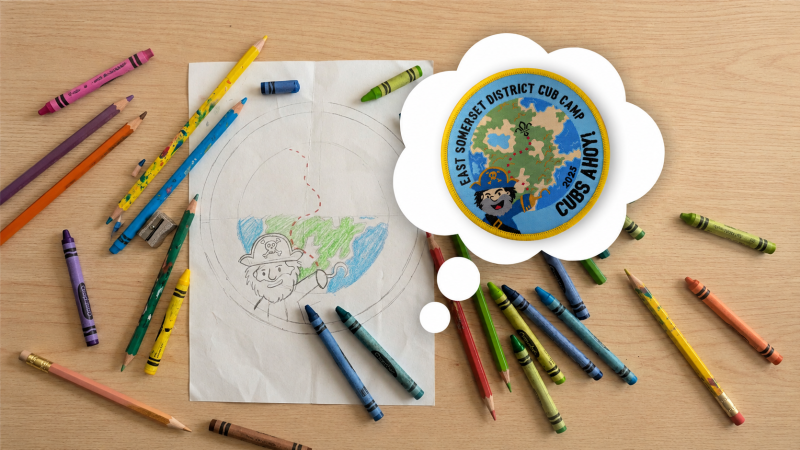
Designing a badge from scratch is one of those activities that Scouts genuinely love. It's creative, it's personal, and it gives young people the chance to see their own ideas turned into something they can actually wear.
Whether you're marking a big camp, celebrating an anniversary, or just looking for a fun session that builds a few different skills at once, helping your scouts design their own badge is a brilliant way to spend a meeting.
Designing a scout badge isn't just an arts and crafts session, it ties into several core Scouting skills at once. Scouts have to think about what they want to represent, share their ideas with others, and often work as a team to agree on a final design.
Many Scout groups run badge design as a competition, where everyone creates their own idea and the group votes on a favourite. This adds an extra layer of fun and gives Scouts a reason to think carefully about their design rather than rushing it. Some groups even use the winning design as the basis for a real badge that gets produced and worn on uniforms, which makes the whole exercise feel like it genuinely matters.
Before pens hit paper, it helps to give Scouts a clear idea of what they're designing for. A few questions can guide their thinking:
Giving Scouts this kind of brief, rather than a blank page, tends to lead to stronger ideas. It also mirrors how real badge design works, where every badge starts with a clear purpose before any artwork begins.
Once the brief is set, it's worth spending a few minutes looking at existing badges. Looking at a badge book, a uniform, or even a camp blanket covered in badges can spark ideas about shapes, colours and symbols that work well.
Encourage Scouts to think about:
It's worth reminding scouts that copyrighted characters or logos can't be used in a design that's going to be produced for real, so encourage original ideas or imagery the group has created themselves.
Once Scouts have settled on a design, or the group has voted on a favourite, it's time to think about turning that sketch into something that could actually be made.
This is where a few practical details make a real difference:
If a design is going to be professionally produced, it usually needs to be tidied up into a proper artwork file before it goes into production. This doesn't mean Scouts need to redraw everything digitally themselves. Many scout badge suppliers are happy to take a scanned sketch or photo of the original design and turn it into clean, print-ready artwork.
Part of what makes this activity special is the moment the finished badge actually arrives. Seeing an idea they sketched on paper turned into a real badge, ready to sew onto a uniform or blanket, is genuinely exciting for Scouts.
A few small touches can make this moment feel even more meaningful:
Helping Scouts design their own badge is a simple activity with a lot of value packed in. It builds creativity, encourages teamwork, and gives young people a genuine sense of ownership over something they'll wear with pride.
If your group has a design ready and you'd like help turning it into a finished badge, get in touch with our team to talk through your options.

View all of your previous orders, your details and much more.
Creating an account with Tolley Badges is easy,
simply enter your email address to get started.
 Wishlist